
I have downloaded, configured, and abandoned four budgeting apps. One of them twice. The story was identical every time. Two enthusiastic weeks of categorizing transactions. Then a busy stretch. Then eight hundred uncategorized transactions and a notification I started swiping away without reading.
What finally stuck wasn’t an app. It’s an index card and fifteen minutes every Sunday. Usually with coffee. Sometimes with the deep sigh of a person who bought concert tickets on a Wednesday.
Why weekly beats monthly
Monthly budget reviews have a fatal flaw. By the time you find the problem, it’s four weeks old and there’s nothing left to do but feel bad about it.
A weekly look means the damage is still small enough to fix. Overspent on takeout by Thursday? The weekend menu becomes rice and whatever the freezer has been hiding. Case closed. Month saved.
Monthly reviews are autopsies. Weekly check ins are checkups.
The whole system, all fifteen minutes of it
Minutes 1 to 5: look at what actually happened
I open my banking app and scroll through the week’s transactions. Not to sort them into seventeen buckets. Just to see them. Reading each purchase once does more for my awareness than any pie chart ever did.
This is also where I catch the sneaky stuff. The subscription that quietly renewed. The free trial that ended and started charging.
Minutes 5 to 10: three numbers
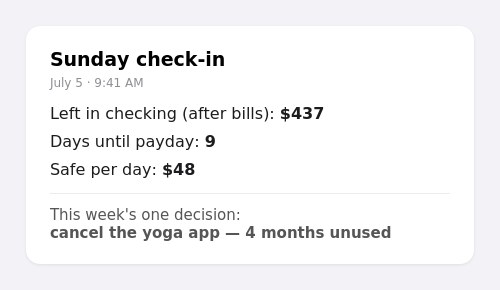
I write three numbers on the card:
- What’s left in checking after this week’s bills
- Days until payday
- What’s left divided by days, which is my daily safe number
That third number runs my week. If it says $14 a day, I know a $40 restaurant night means two very quiet days after it. I can still choose the restaurant. But I’m choosing it with my eyes open, and it turns out that’s the entire secret of budgeting.
Minutes 10 to 15: one decision
Every week I make exactly one money decision. Cancel something. Move $20 to savings. Compare this week’s grocery total to last week’s. One.
When I tried fixing everything at once, I fixed nothing and quit by February. One decision a week is 52 fixes a year. No app ever got that much out of me.
What happened after six months
The numbers first. My mystery spending, the money I couldn’t account for at the end of the month, dropped from around $200 to under $40. I caught two subscription price hikes within days instead of months. And the end of month panic spiral just stopped, because by then there were no surprises left.
You know what changed most, though? The feeling. Checking my money stopped feeling like stepping on a scale after the holidays. It’s boring now. Money admin should be boring. The drama was never a feature.
And if you think small purchases aren’t your leak, I tracked every one of mine for 60 days. The results were rude.
If you want to try it
Pick a day you’re reliably home. Same time, same mug. The ritual does more work than you’d expect. Keep the card somewhere you’ll see it all week.
And if you miss a Sunday, do it Monday. Don’t turn one missed week into a story about how you can’t stick with anything. The system survives missed weeks. That’s the whole point of it.
Fifteen minutes. Three numbers. One decision. It replaced four apps and most of my money anxiety.

Amelia writes Cents That Count from her kitchen table. She has quit four budgeting apps, run one no spend month, tracked every small purchase for 60 days, and still buys coffee. Everything here is tested on a real, ordinary budget first.
More about this blog →